


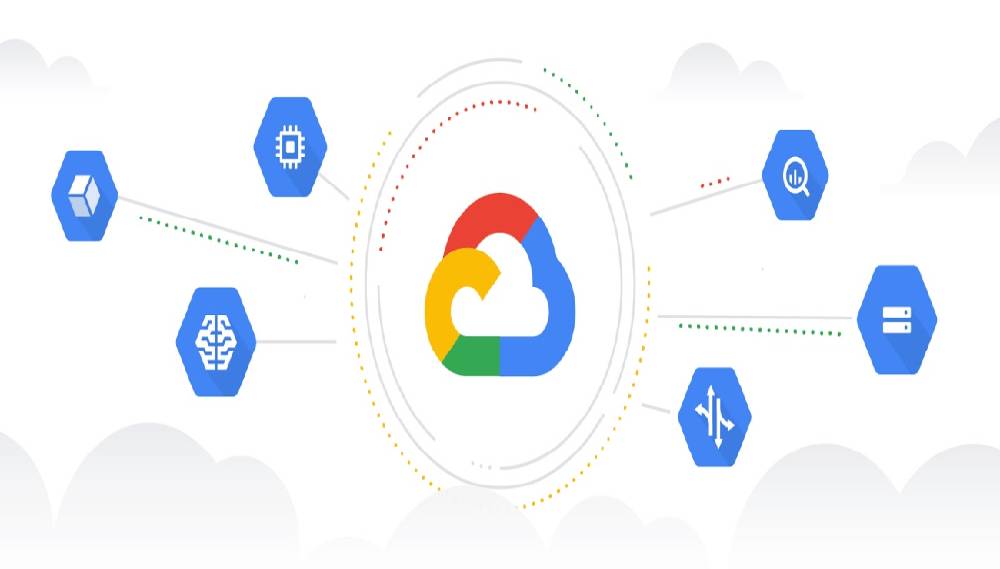
Google Cloud Platform (GCP) holds approximately 12 percent of global cloud infrastructure market share in 2026 — third behind AWS and Azure — but leads in three specific domains that are driving the majority of new cloud consulting engagements: AI and machine learning through Vertex AI and Gemini API integrations, data warehousing and analytics through BigQuery, and containerised application deployment through Google Kubernetes Engine. For Gurugram IT companies building data-intensive SaaS products, analytics platforms, or AI-powered applications, GCP's native integration between its infrastructure services and its AI/ML tooling produces a development advantage that AWS and Azure require additional orchestration to match. Garuda Technologies designs, deploys, and manages Google Cloud infrastructure for IT companies, SaaS products, and data engineering teams in Gurugram — from initial GCP account setup and architecture design through ongoing managed support.
Every major cloud platform has workloads it handles better than its competitors. Choosing GCP for a generic web application deployment over AWS or Azure — where tool selection and community support are equivalent — requires no strong technical rationale. But for three specific workload categories, GCP's architectural advantages are measurable and significant:
Workload Category | Why GCP Is the Right Choice |
AI and Machine Learning Workloads | Vertex AI is GCP's unified ML platform covering model training, deployment, model monitoring, and the Gemini API for large language model integration. Google's TPUs (Tensor Processing Units) — custom-designed AI accelerator chips — provide training performance for large neural networks that GPU-based training on AWS or Azure cannot match at equivalent cost. For Gurugram IT companies building AI-powered products — recommendation engines, document processing pipelines, predictive analytics, or Gemini API integrations — GCP provides the most direct path from prototype to production AI at the lowest infrastructure cost per training hour. |
Data Warehousing and Analytics | BigQuery is GCP's fully managed, serverless data warehouse capable of running SQL queries across petabyte-scale datasets in seconds. Unlike RDS or Azure SQL, BigQuery charges only for queries run rather than for provisioned compute — making it significantly cheaper for analytics workloads with variable query frequency. BigQuery ML enables machine learning model training directly within SQL queries without data movement. For IT companies handling large-scale user event data, financial transaction analysis, or real-time reporting at scale, BigQuery consistently outperforms equivalent AWS Redshift or Azure Synapse Analytics configurations on both performance and cost at the data volumes typical of Indian SaaS companies. |
Kubernetes and Containerised Applications | Google invented Kubernetes and GKE (Google Kubernetes Engine) remains the most mature managed Kubernetes service across all three hyperscalers. Autopilot mode in GKE eliminates the need to manage node pools — Google automatically provisions and scales nodes based on Pod resource requests, reducing operational overhead for engineering teams that want Kubernetes orchestration without cluster management work. For Gurugram IT companies adopting Kubernetes, GKE's autopilot mode is the lowest-friction path to production Kubernetes deployment. |
Compute Engine provides virtual machines for applications requiring persistent server infrastructure — comparable to AWS EC2 but with Google's live migration capability that moves running VMs between physical hosts without downtime during hardware maintenance. Cloud Run is GCP's serverless container platform, running Docker containers without managing servers — billing only for the CPU and memory consumed during active request processing. Cloud Run is the simplest path to deploying a containerised Laravel, Node.js, or Python API on GCP with automatic scaling to zero during quiet periods and autoscaling to hundreds of instances under load. Cloud Functions provides event-driven serverless compute equivalent to AWS Lambda — for webhook handlers, Pub/Sub message processors, and scheduled tasks.
Garuda Technologies implements BigQuery for Gurugram IT companies requiring analytical data storage separate from their operational database. The standard architecture: operational data in Cloud SQL (managed MySQL or PostgreSQL) or Firestore, a data pipeline using Cloud Dataflow or dbt to move and transform data into BigQuery daily or in real time, and Looker Studio (Google's free BI tool) connected to BigQuery for dashboard and report delivery. This architecture separates analytical query load from operational database load — preventing heavy reporting queries from degrading application performance — and enables non-technical stakeholders to self-serve analytics without requiring developer involvement for every data question.
Vertex AI provides the infrastructure for training, deploying, and monitoring machine learning models in production. For Gurugram IT companies with data science teams building predictive models, Vertex AI Workbench provides managed Jupyter notebooks on GCP infrastructure with direct access to Google Cloud Storage datasets and Vertex AI training jobs. The Gemini API — available through Vertex AI — provides access to Google's Gemini language models for building AI-powered features in applications: document summarisation, conversational interfaces, content classification, and structured data extraction from unstructured text. Garuda Technologies integrates Gemini API into web and mobile applications for clients building AI-powered product features.
GCP's global load balancer is a single anycast IP address that routes requests to the nearest healthy backend across all GCP regions simultaneously — without requiring separate regional load balancers. This architecture produces lower latency for globally distributed user bases than AWS or Azure's regional load balancer models. Cloud CDN caches content at Google's 150+ edge locations globally, including multiple Indian points of presence in Mumbai, Chennai, and Bangalore, delivering sub-50ms response times for cached assets to Indian mobile users.
Platform | When to Choose It | Best For |
Choose GCP when: | Building AI/ML-intensive applications (Vertex AI, TPUs, Gemini API). Data warehouse or analytics platform is a primary product component (BigQuery). Kubernetes is the container orchestration standard and operational simplicity matters (GKE Autopilot). Strong preference for Google Workspace integration (Google Identity, Drive, Calendar APIs in the same ecosystem). | SaaS with AI features, data analytics platforms, Kubernetes-first teams |
Choose AWS when: | The broadest service catalogue and the largest community of tutorials, third-party tools, and support resources matter. Indian region proximity for low-latency deployments (Mumbai and Hyderabad regions). Mixed workloads without a dominant specialisation in AI/ML or Kubernetes. Existing team familiarity with AWS is the fastest path to productive deployment. | General web applications, ecommerce, mixed workloads, AWS-familiar teams |
Choose Azure when: | The organisation already uses Microsoft 365, Active Directory, or Teams — Azure's native integration with Microsoft's productivity stack produces identity, compliance, and access management advantages. .NET-based application stack benefits from Azure's first-class .NET support. Enterprise organisations with Microsoft licensing agreements that include Azure credits. | Microsoft-stack enterprises, .NET applications, Microsoft 365 integrated organisations |
Engagement Type | India Cost Range and GCP Monthly Spend (2026) |
GCP setup and architecture (standard app) | INR 1,00,000 to INR 2,50,000. Cloud Run, Cloud SQL, Cloud Storage, Cloud CDN setup. GCP monthly spend: INR 10,000 to INR 35,000. |
BigQuery analytics implementation | INR 1,50,000 to INR 3,50,000. BigQuery dataset, data pipeline (Cloud Dataflow or dbt), Looker Studio dashboards. BigQuery storage is approximately INR 1.7 per GB/month; query costs depend on data scanned. |
GKE application deployment | INR 2,00,000 to INR 6,00,000. GKE Autopilot cluster, CI/CD pipeline, Helm chart deployment, monitoring. GCP monthly spend: INR 25,000 to INR 1,20,000 depending on workload. |
Vertex AI / Gemini API integration | INR 1,50,000 to INR 5,00,000. Vertex AI workbench, model deployment endpoint, Gemini API integration into application. Ongoing API costs depend on token usage. |
GCP managed support retainer | INR 20,000 to INR 60,000 per month. Security, cost, performance, and availability monitoring for existing GCP environments. |
AWS and GCP provide largely equivalent infrastructure services for standard web application deployment — compute, managed databases, object storage, and CDN. GCP's advantages are most pronounced for three workload types: AI and machine learning (Vertex AI, TPUs, Gemini API), data analytics (BigQuery's serverless pricing and performance at scale), and Kubernetes (GKE Autopilot's operational simplicity). AWS's advantages are strongest for the broadest service catalogue depth, the largest community of third-party integrations and support resources, and the most mature Indian region presence (Mumbai and Hyderabad). For a Gurugram IT company deploying a standard web application without AI or analytics requirements, AWS and GCP are approximately equivalent — the decision typically comes down to team familiarity.
BigQuery charges on two dimensions: storage (approximately INR 1.7 per GB per month for active storage, INR 0.35 per GB for long-term storage on data unchanged for 90 days) and queries (approximately INR 42 per TB of data scanned per query). The first 1 TB of query data scanned per month is free. For most Gurugram IT companies with modest data volumes, BigQuery monthly costs are INR 2,000 to INR 15,000 — significantly cheaper than provisioning and running a dedicated analytics database on EC2 or a managed Redshift cluster. Cost control requires partitioning large tables by date and clustering by commonly filtered columns — reducing the data scanned per query and therefore the query cost.
Yes — GCP's integration with Google Workspace (formerly G Suite) is a genuine advantage for organisations already using Gmail, Drive, Calendar, and Meet. Google Cloud Identity provides single sign-on across Google Workspace and GCP using the same Google accounts employees already use. Cloud Storage integrates with Drive for document storage. BigQuery connects natively to Looker Studio (free) and Google Sheets for data analysis by non-technical users. For Gurugram IT companies and their enterprise clients operating on Google Workspace, building applications on GCP reduces authentication complexity and enables direct data flow between operational applications and the productivity tools employees use daily.

Garuda Technologies - Copyright . All rights reserved.
Garuda Technologies is a Gurgaon-headquartered technology and travel services company operating from Udyog Vihar, Sector 19 — the heart of Gurugram's IT and industrial corridor. Founded with the conviction that businesses deserve a single accountable partner for their digital and travel needs, Garuda Technologies operates two integrated verticals: a full-spectrum IT and digital services division, and a travel services division powered by seven specialized travel brands.