



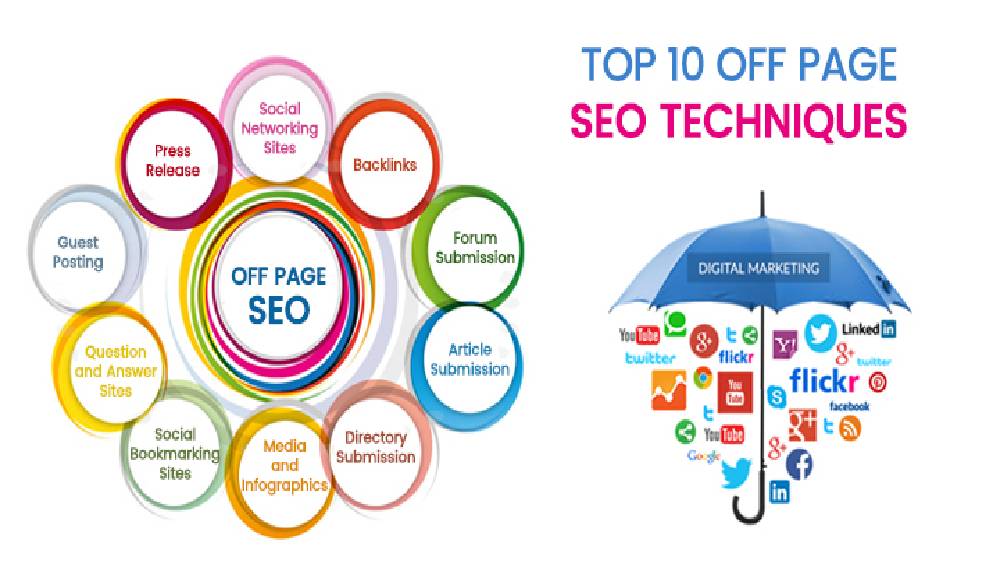
Off-page SEO is everything that happens outside your website that influences your search rankings. The central mechanism is link equity: when authoritative, relevant websites link to yours, they transfer a portion of their domain authority to your pages, signalling to Google that your content is credible and worth ranking. But in 2026, off-page SEO is broader than link building alone. Brand mentions, digital PR coverage, review signals, entity recognition by knowledge graphs, and social authority all contribute to how Google assesses your domain's trustworthiness. Garuda Technologies builds off-page authority through white-hat outreach, digital PR, and entity-focused brand building — no private blog networks, no paid link schemes, no tactics that accumulate penalties.
On-page SEO and technical SEO determine whether Google can understand and crawl your pages. They are the floor. Off-page authority determines the ceiling — the maximum ranking position a page can achieve relative to competitors with better backlink profiles. A perfectly optimised page with zero external links will be outranked by a moderately optimised page with 50 high-authority referring domains for any competitive keyword. The Gurgaon IT services market is competitive enough that off-page authority is the decisive variable separating page 1 results from page 2.
The specific off-page signals Google weights most heavily in 2026 are: referring domain count (unique domains linking to your site), referring domain authority (the domain rating of those linking sites), topical relevance of linking sites (IT publications linking to IT pages carry more weight than generic directories), anchor text diversity, and brand mention frequency across the web.
Off-Page Signal | Why It Matters and How It Works |
Backlinks from referring domains | The foundation of off-page SEO. Each unique domain linking to your site votes for its credibility. A single link from a DR 70 Indian tech publication outweighs 50 links from low-authority directories. Domain diversity matters more than raw link count. |
Brand mentions (linked and unlinked) | Google's Natural Language Processing identifies brand mentions across the web even without a hyperlink. Consistent, positive brand mentions in publications, forums, and review platforms build entity recognition and E-E-A-T signals. |
Digital PR and media coverage | Coverage in Indian business publications — YourStory, Inc42, Economic Times Tech, NASSCOM — generates high-authority backlinks and broad brand exposure simultaneously. One feature article in YourStory produces more SEO value than 200 directory submissions. |
Review signals | Google, Clutch, GoodFirms, JustDial, and G2 review profiles influence both local SEO rankings and B2B buyer trust signals. Review velocity (consistent flow of new reviews) and average rating both contribute to off-page authority for local search. |
Social signals | LinkedIn shares, Twitter/X mentions, and Reddit threads involving your content do not pass link equity directly, but they drive discovery by journalists and bloggers who do link. Social distribution is a link acquisition catalyst, not a ranking signal in itself. |
Competitor backlink replication | Systematically identifying domains linking to top-ranking competitor pages and earning equivalent links from those same sources. If a site links to three of your competitors but not to you, it is a qualified and reachable link target. |
Entity consistency across platforms | Consistent Name, Address, Phone, and business description across LinkedIn, Crunchbase, Google Business Profile, Clutch, JustDial, and industry directories strengthens Google's entity graph recognition of your business. |
Before building new links, the existing profile is audited. Every referring domain is assessed for domain rating, organic traffic, topical relevance, and spam score. Toxic links — those from low-quality, irrelevant, or penalised domains — are identified and disavowed via Google Search Console. Building links on a foundation with toxic backlinks reduces the net authority gain from new acquisition. The audit also identifies the referring domain count and average domain authority of the top 3 competitors, establishing the gap Garuda Technologies needs to close.
Three categories of link opportunities are identified simultaneously. Competitor backlink replication: domains linking to top-ranking competitors that do not link to your site. Industry directory opportunities: high-authority IT directories, business listings, and review platforms where your profile is incomplete or absent. Content-based link prospects: publications that have covered topics adjacent to your expertise and would naturally reference a well-written, data-rich piece of content on your site.
The most durable off-page SEO links come from journalists and editors who link because your content genuinely adds value to their readers. We identify 2 to 3 data angles specific to your business or industry — an original survey, a proprietary data set, an analysis of local market trends — and develop a digital PR asset around each. These assets are pitched to Indian tech publications, business journals, and industry newsletters. A single successful digital PR placement in a DA 60+ publication produces a link that would otherwise require months of outreach to acquire through guest posting.
For IT companies in Gurgaon, guest posting targets niche-relevant platforms: SaaS industry blogs, Indian tech publications, B2B marketing platforms, and startup ecosystem sites. Each target domain is vetted for organic traffic (minimum 1,000 monthly visitors), domain rating (minimum 40), spam score (under 5 percent), and topical relevance to IT services. Human-written, editorial-quality articles are produced for each placement — not the AI-generated filler that gets rejected by editors within minutes.
Clutch, GoodFirms, G2, and Google Business Profile are the four highest-value review platforms for Gurgaon IT companies targeting B2B clients. Clutch and GoodFirms placements generate do-follow links from DR 70+ domains — among the highest-authority backlinks available to IT service companies. We optimise profiles on all four platforms, implement review acquisition workflows, and monitor and respond to reviews to maintain the velocity and sentiment that both platforms and Google weight in their ranking algorithms.
A backlink profile with toxic links — links from penalised domains, link farms, irrelevant foreign sites, and sites built solely for link selling — can trigger Google's spam filters and suppress rankings across an entire domain. This is one of the most misunderstood aspects of off-page SEO: building more links does not always improve rankings. Building links from low-quality sources while the existing profile contains toxic backlinks actively harms performance.
Toxic Link Type | How to Identify and What to Do |
Links from link farms and PBNs | Private blog networks and link farm sites pass no equity and carry significant penalty risk. Sites with zero organic traffic, duplicate content, and site-wide exact-match anchor text linking are classic PBN signals. |
Links from irrelevant foreign domains | An IT company in Gurgaon receiving backlinks from a Russian gambling site and a Chinese pharmaceutical blog has a problematic profile. Topical and geographic relevance both influence link equity quality. |
Over-optimised anchor text | A profile where 60 percent of anchors are exact-match keywords ('SEO company Gurgaon') looks manipulated. Natural anchor text distribution includes branded anchors, naked URLs, generic terms, and a minority of keyword-rich anchors. |
Links from penalised domains | Sites that have received a Google manual penalty pass negative signals rather than positive equity. Links from domains with declining organic traffic trends, thin content, and prior penalty history are toxic. |
Site-wide footer or sidebar links | Sitewide links from one domain count as a single link in Google's evaluation but look manipulative if the context is a paid placement. Footer links specifically have diminished equity value and elevated scrutiny. |
Link building is a subset of off-page SEO — specifically the process of acquiring hyperlinks from external websites. Off-page SEO is broader, encompassing link building plus brand mention building, review signal management, entity optimisation, digital PR, and social authority development. Both the Link Building page and this Off-Page SEO page serve different search intents and keyword targets within the same topical cluster, which is why they exist as separate pages rather than a single combined page.
There is no universal number. The required referring domain count depends on your specific competitors in your specific SERP. Run a backlink gap analysis: if your top 3 competitors have 45, 62, and 38 referring domains respectively on their target service pages, ranking among them requires building toward a comparable profile — prioritising domain authority and topical relevance over raw count. Garuda Technologies provides this competitor gap analysis as part of every off-page SEO engagement before any link acquisition begins.
New backlinks from high-authority domains typically begin influencing rankings within 4 to 12 weeks of Google crawling and indexing the referring page. Digital PR placements in high-traffic publications are crawled quickly — within days of publication in most cases. Guest post placements on smaller sites may take 3 to 6 weeks to be indexed. The cumulative authority effect of a sustained off-page programme becomes clearly visible at the 4 to 6 month mark in Search Console domain-level authority metrics.
Paid guest posts are acceptable when placed on genuine, traffic-generating editorial websites where the link appears naturally within high-quality content. They are risky when placed on sites built solely for link selling — those with no organic traffic, hundreds of outbound links per page, and content that exists only to host backlinks. Google's spam policies target the link scheme, not the payment. A link paid for on a genuine DR 55 publication with 20,000 monthly organic visitors is indistinguishable from an earned link. A link on a site with zero traffic and 400 outbound links is a risk regardless of whether it was paid for or earned.
Competitor backlink replication delivers the fastest results at scale. Use Ahrefs or SEMrush to identify the top 10 linking domains for your 3 main competitors. These sites have already demonstrated willingness to link to IT content in your market. Outreach to them with a compelling pitch — a unique data angle, an original resource, or a content contribution offer — closes links faster than cold outreach to unknown prospects. Simultaneously, complete and optimise profiles on Clutch and GoodFirms immediately — both generate DR 70+ do-follow links from profile pages alone, with no outreach required beyond submitting accurate company information.

Garuda Technologies - Copyright . All rights reserved.
Garuda Technologies is a Gurgaon-headquartered technology and travel services company operating from Udyog Vihar, Sector 19 — the heart of Gurugram's IT and industrial corridor. Founded with the conviction that businesses deserve a single accountable partner for their digital and travel needs, Garuda Technologies operates two integrated verticals: a full-spectrum IT and digital services division, and a travel services division powered by seven specialized travel brands.